There was a time when pulling the goalie before the final minute felt like coaching malpractice. The standard was simple: wait until the last 60–90 seconds, toss the goalie a baseball cap and a prayer, and hope your extra attacker could turn one good look into a miracle. And almost without exception, that strategy was reserved for teams trailing by a single goal.
Now? Coaches are getting itchy earlier and earlier — a trend we continue to completely disagree with. The idea that a desperate team, in a game played with a bouncing piece of rubber, can realistically keep the puck away from an opponent for several uninterrupted minutes feels fundamentally flawed.
Supporters of the “early pull” argue that teams protecting a lead spend the final stretch in full-on “don’t lose” mode. They’re not attacking — they’re flipping pucks out, conceding territory, and hoping the clock does the rest. That approach, the argument goes, naturally leads to extended possession time for the team trying to catch up.
Fine. But none of that changes an inconvenient truth: most empty-net goals aren’t the result of daring offensive rushes or bold tactical gambles. They’re born from one mistake — a bad rim, a bobbled puck at the point, a lost faceoff — and then, boom, 180 feet later you’re watching a slow-motion dagger slide into an empty net.
To be fair, the analytics crowd tells us the numbers don’t exactly help our side of the argument. The NHL’s own Seattle Kraken analytics research shows that during the 2020–21 season, teams that pulled their goalie scored at least once 18.1 percent of the time. Several models suggest the “optimal” moment to add the extra attacker is around the 17-minute mark — and sometimes even earlier, depending on the game’s situation.
Aha! Game situation. That inconvenient variable the spreadsheets tend to gloss over.
Let’s talk about that.
We’ll happily concede this much: pulling the goalie when trailing by one goal in the final 60–90 seconds is essentially a no-risk play. A minute of sustained offensive-zone pressure is far more valuable than anything you’re likely to generate at five-on-five against a team turtling for dear life. If the puck ends up in your empty net that late, so be it.
But what about the far more challenging scenario where a team trails by two goals?
If your club is stinking the joint out, barely touching the puck, and showing no signs of life, then sure—go with the geeks, roll the dice early and see what happens. You’re not giving much away because you weren’t threatening anyway.
But now let’s look at the opposite situation.
Last week, the visiting Minnesota Wild stormed out to a 5–1 lead over the Toronto Maple Leafs after two periods. As expected, the Wild spent much of the third period sitting back, trying to bleed the clock. With five minutes remaining, sustained Toronto pressure finally paid off when Auston Matthews scored to cut the deficit to two.
What followed were several high-energy Maple Leafs shifts, fueled by a suddenly re-energized crowd. Minnesota was clearly on its heels. At that moment, vacating the net in favour of an extra attacker felt unnecessary — even counterproductive.
Unfortunately for Toronto fans, head coach Craig Berube didn’t read the room. With roughly four minutes remaining — and with his team already controlling the offensive zone — Berube made the now-familiar copycat, follow-the-geeks decision to pull his goalie.
Predictably, the puck-possession pendulum swung back Minnesota’s way. It always does. After a routine Toronto dump-and-chase entry failed to gain puck possession, the Wild escaped their zone with ease.
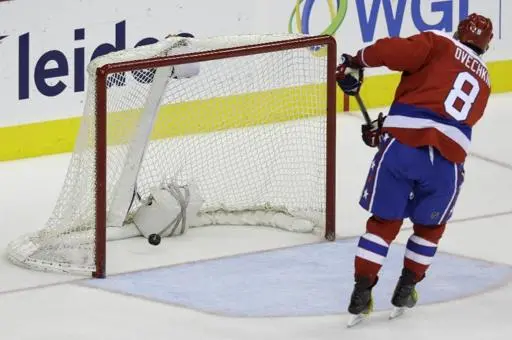
Seconds later, Marcus Foligno shoveled the puck into the vacant Toronto net to complete his hat trick — instantly puncturing the building’s energy. The arena fell silent. There were still three full minutes left on the clock.
Craig Berube did not make a situational decision.
Instead, Berube pulled his goalie in hopes of doing something his team was already doing quite well at five-on-five. Worse still, they were still doing it. His decision was based on the clock, not the game.
Implicitly, his move indicated a belief that the Leafs could control the puck for four consecutive minutes and score twice. Instead, less than a minute later, the puck was sitting in the empty net and the comeback was dead.
The analytics crowd can cite their pull-the-goalie-early percentages all they want. In their world, the decision isn’t situational — it’s procedural. Watch the clock. Make the move. Repeat.
That’s nonsense.
Pulling the goalie should always be situational. And on that night, the Minnesota Wild were surely grateful that Craig Berube didn’t think so. He bailed them out.