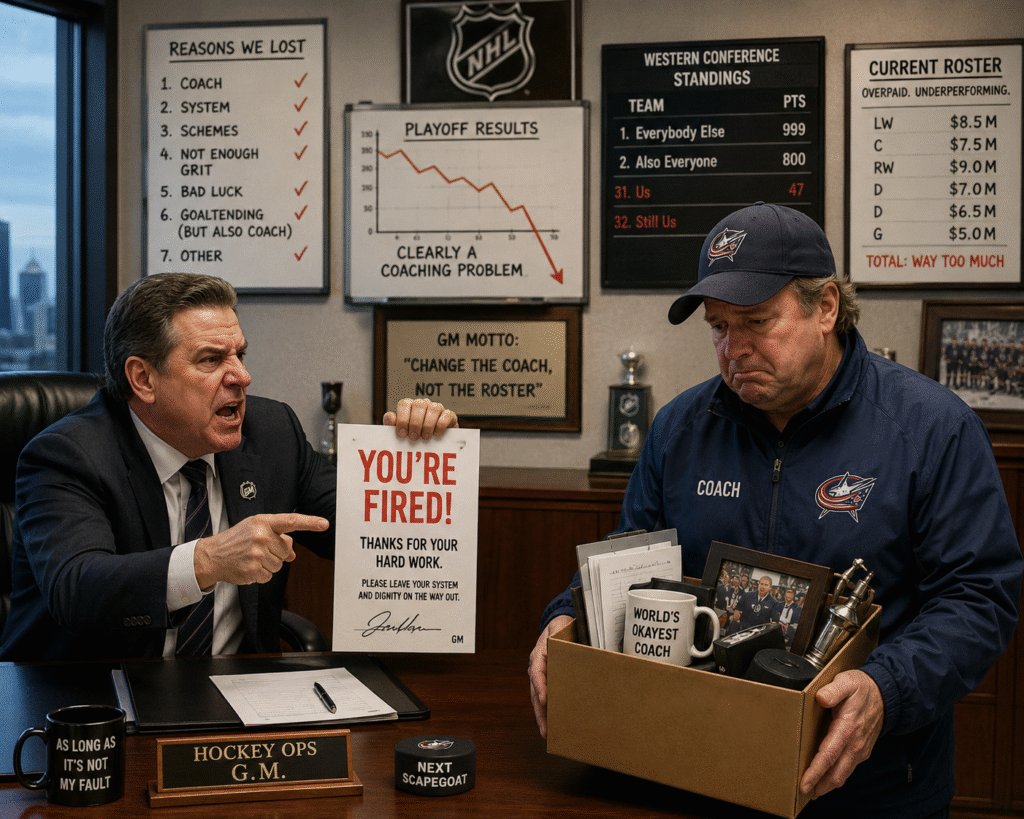
Welcome to the NHL’s annual “Fire the Coach” season which seems to begin sooner every spring. You know the drill: The regular season barely ends before owners and general managers start marching coaches toward the nearest exit like they’re personally responsible for missed open nets, brutal defensive coverage, terrible contracts, bad drafting, weak goaltending, salary-cap disasters, or the fact a third-line winger somehow got eight years and $52 million.
To be fair here: sometimes firing a coach is justified. A coach can lose the room. A system can become outdated. A voice can grow stale. Certain teams absolutely need a reset behind the bench. Toronto’s dismissal of Craig Berube? You can at least make a hockey argument for it. The Leafs spent massive stretches of games trapped in their own zone under Berube’s ultra-conservative, direct-line, dump-and-chase system. Oddly enough, the exact same territorial problems existed during his first season with Toronto too—despite winning the Atlantic Division crown. The difference that year was elite goaltending that papered over the cracks and disguised how often Toronto was being out-possessed. Eventually, though, the masking tape came off.
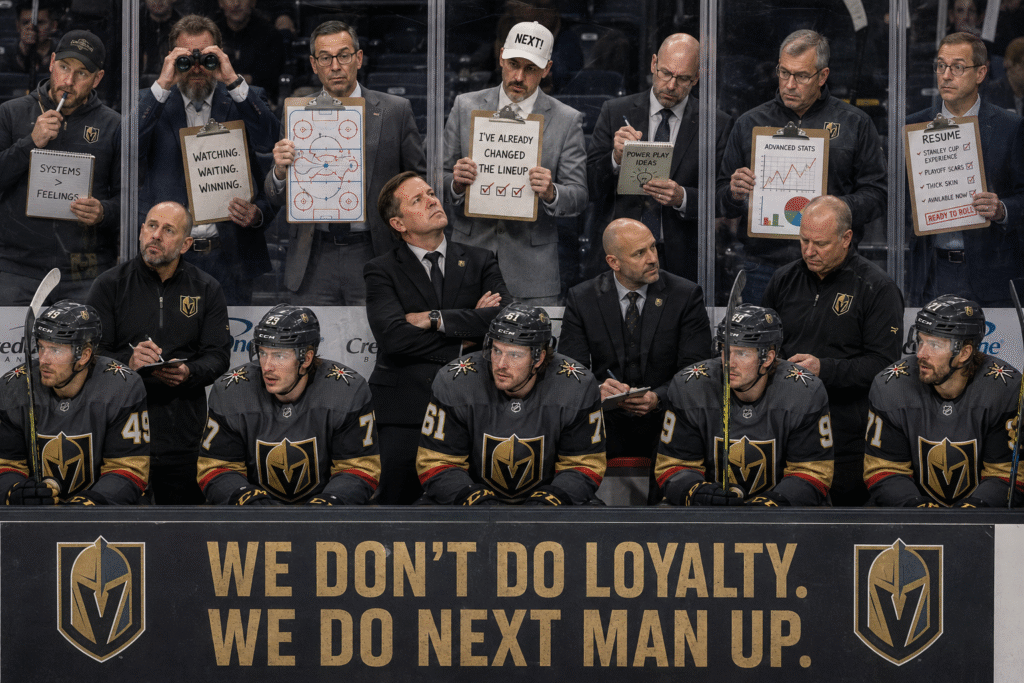
So yes, sometimes coaching changes are understandable. But most NHL firings? They’re organizational smoke bombs. They’re general managers redirecting blame away from the real problem: the roster that they themselves built. And no firing illustrates that better than the Edmonton Oilers dumping Kris Knoblauch this week despite the fact he recently guided Edmonton to back-to-back Stanley Cup Final appearances. Apparently, according to Edmonton’s Stan “Don’t Call Me Scotty” Bowman, a coach who reaches consecutive Stanley Cup Finals can suddenly “forget” how to coach hockey one year later. What really changed Stan? The coach? Or your roster? Hello? Stan? Stan?
The Oilers’ problems weren’t mysterious. Their defensive structure wobbled all season. Their depth scoring disappeared for long stretches. Their roster remained heavily top-loaded. Connor McDavid himself admitted the club was “average all year.” So, fire the coach. Problem solved
And here’s where the league becomes truly hilarious. After firing coaches nonstop every year, NHL teams almost immediately recycle the exact same fired coaches back into new jobs. The NHL coaching carousel has become professional hockey’s version of speed dating. For example:
🏒 Peter Laviolette has coached 6 NHL teams:
New York, Carolina, Philadelphia, Nashville, Washington, New York Rangers
🏒 Rick Bowness has coached 7 NHL teams:
Winnipeg, Dallas, Tampa Bay, Ottawa, Boston, Phoenix/Arizona, Columbus
🏒 Paul Maurice has coached 4 NHL teams:
Hartford/Carolina, Toronto, Winnipeg, Florida
🏒 Claude Julien has coached 3 NHL teams:
Montreal, New Jersey, Boston (and somehow got multiple runs with Montreal.)
🏒 Lindy Ruff has coached 3 NHL teams:
Buffalo (twice), Dallas, New Jersey
🏒 John Tortorella has coached 6 NHL teams:
Tampa Bay, New York Rangers, Vancouver, Columbus, Philadelphia, Las Vegas
🏒 Barry Trotz has coached 3 NHL teams:
Nashville, Washington, New York Islanders
🏒 Bruce Boudreau has coached 4 NHL teams:
Washington, Anaheim Minnesota, Vancouver
🏒 Peter DeBoer has coached 6 NHL teams:
Florida, New Jersey, San Jose, Las Vegas, Dallas, New York Islanders
Meanwhile, younger coaches, innovative thinkers, or successful AHL and junior coaches often wait years for opportunities because NHL executives prefer safe and predictable over new and progressive. When a team succeeds, management talks endlessly about their “culture,” “structure,” and “systems.” When the exact same team collapses a year later? Find a scapegoat. Blame the coach.
The exact firing numbers fluctuate depending on whether you count interim coaches, “mutual partings,” and off-season non-renewals, but the overall pattern is pretty staggering.
Over the last five NHL seasons: Around 45–55 head coaching changes have occurred across the league. A huge percentage of replacement hires were retreads.
One analysis from 2024 noted that since the start of the 2022-23 season alone, 27 of 32 NHL teams had changed coaches at least once.
Meanwhile, ESPN reported that the NHL had 25 in-season coaching firings in just five years, more than MLB, the NBA, or the NFL during that same span.
Former players, broadcasters, and analysts have spent years questioning the NHL’s obsession with coaching changes and the endless retreads. The criticism usually sounds the same: if management keeps changing coaches while keeping the same flawed roster core intact, eventually the problem probably isn’t the coach anymore. A bad blue line doesn’t become elite because somebody changes line combinations. A soft roster doesn’t become tougher because somebody yells louder during intermission. And no system on Earth can magically transform poor roster construction into a Stanley Cup contender.
Yet every spring, NHL franchises perform the same ritual anyway. Fire the coach. Hold a press conference. Talk about “a new voice.” Promise accountability. Then quietly hope fans don’t notice the same management group that built the mess is still running the show.
Again, there are legitimate coaching dismissals in hockey. But the NHL crossed from accountability into absurdity a long time ago. At this point, many coaching firings aren’t solutions. They’re self-serving, finger-pointing, “nothing-to-see-here” coverups orchestrated by paranoid GM’s looking to buy time—and keep the paycheques flowing.