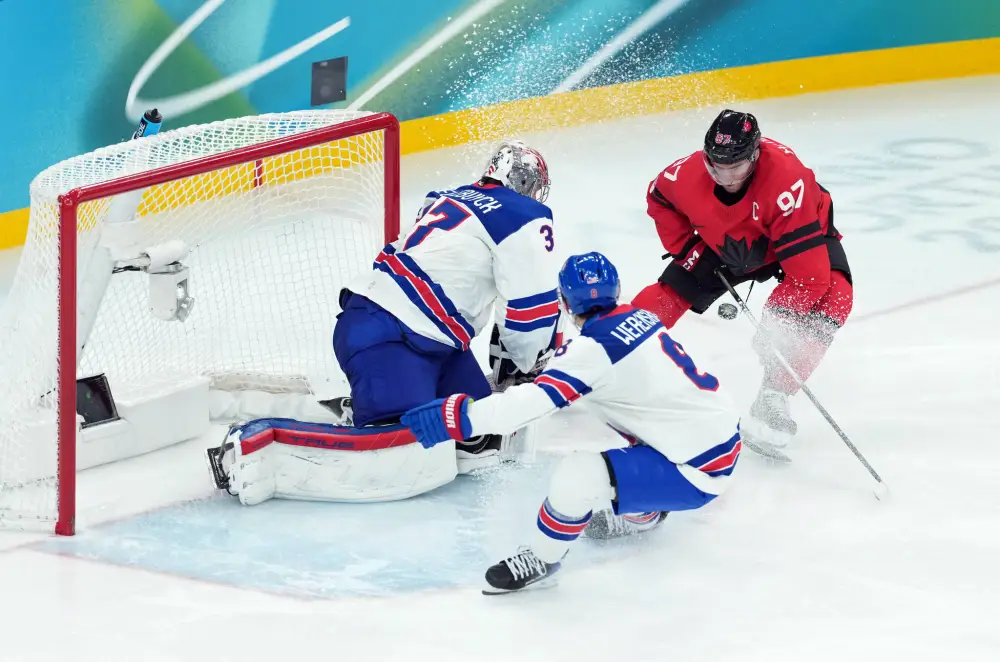
The just-completed men’s Olympic hockey tournament was captivating. At times thrilling. At times ridiculous. And in the aftermath — downright stupid. Plenty has already been written about the brilliance on the ice. The speed. The skill. The drama. What deserves equal attention, however, is the post-tournament fallout — captivating for all the wrong reasons.
Let’s start with the format: Settling a tied medal-round game with 3-on-3 overtime is a gimmick. It may work in the NHL regular season — where travel schedules and television timeslots rule the day — but this is the Olympics. A gold medal should not hinge on open-ice shinny. As Canada’s head coach John Cooper put it:
“You take four players off the ice, now hockey’s not hockey anymore. There’s a reason overtime and shootouts are in play — it’s all TV-driven to end games, so it’s not a long time. There’s a reason why it’s not in the Stanley Cup Final or playoffs.”
Exactly. If the Stanley Cup Final doesn’t use it, why would the Olympics? Perhaps starting the tournament earlier — instead of squeezing it up against a meticulously timed closing ceremony — would allow hockey to remain hockey. Yes, Canada both benefited and suffered under the format. That’s beside the point. The issue isn’t who won or lost because of it. The issue is whether a high-profile international championship should ever be reduced to a glorified skills competition.
Then came the officiating outrage: Former NHL great and Finnish legend Teemu Selanne damaged his own credibility by fuming over a late third-period high-sticking penalty that led to Canada’s comeback power-play goal. His suggestion? That the rulebook should be… flexible… when the game is tied late. That’s precisely the standard the NHL has been criticized for years — “let them play” until something totally illegal happens. A high stick to the face is a high stick to the face. First minute. Last minute. It’s a penalty ten times out of ten. And Selanne’s hissy-fit complaint aged poorly. In the gold medal game, both Canada (Sam Bennett’s double minor) and the Americans (down two men late) paid the same price. The rulebook didn’t suddenly change uniforms.
Then social media happened:
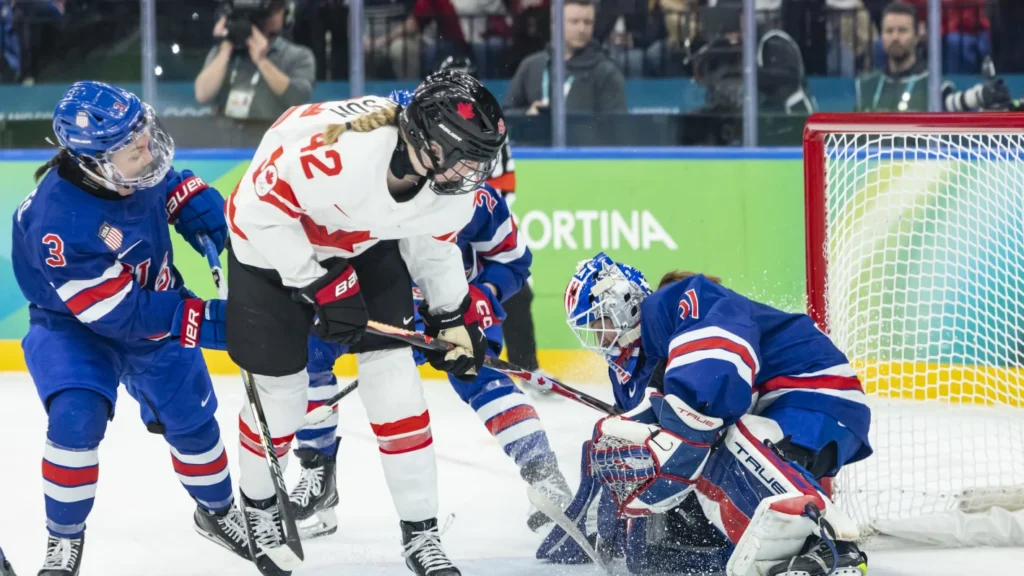
After the United States captured gold, American forward Matthew Tkachuk thought it wise to post an image depicting Canadian players dressed as bridesmaids. Classy.
U.S. President Donald Trump then responded in kind — sharing an AI-generated video of himself racing around the ice in an oversized suit, scoring an imaginary goal, then dropping the gloves and throwing punches at an unsuspecting Canadian. This, from the President of the United States?
One online observer summed it up neatly: “When Canada wins, they celebrate winning. When the U.S. wins, they celebrate the other team losing.”
Brady Tkachuk didn’t help matters, shouting “close the Northern border” during the team’s dressing-room celebration — an odd sentiment from the captain of a Canadian-based NHL franchise. There’s an old saying in sports: act like you’ve been there before. Then again, he hasn’t.
The American team’s behaviour drew criticism internationally — as well as at home. Matters worsened when a post-victory video call from President Trump to the American dressing room included a cheap-shot remark directed at the U.S. women’s team — another Olympic champion. The majority of the men’s roster laughed along. The women’s team later declined an invitation to visit the White House.
What a mess.
And then came the somewhat odd media takes:
We were told that Auston Matthews (America’s team captain) can now officially be labelled a “winner.” Not so fast. Matthews was defensively responsible throughout the tournament, yes. But offensively? He was average heading into the final and offensively invisible in the gold medal game. Winning one game does not rewrite a career narrative.
The loudest proclamation of all was that America’s victory signaled a “changing of the guard.” A new hockey sheriff was in town. Um… no. It was one game. A game in which the Americans were largely outplayed. A game settled in overtime via a format many consider a glorified coin flip. Hardly a seismic shift in the sport’s power structure.
And just when the silliness appeared to peak, President Trump announced plans to award the Presidential Medal of Freedom to U.S. goaltender Connor Hellebuyck — an honour traditionally reserved for individual lifetime achievements that contribute to the country. It will take more than a hockey win every few decades to fix what ails that country.
Based on a single hockey game, the excessive exaggeration, chest-thumping and political theatre has been staggering. The Olympics were intended to embody sportsmanship, respect and international goodwill. This felt like the opposite.
The hockey itself was magnificent.
The aftermath? Not so much.